Winding your way through the icy channels of the legendary Northwest Passage is history brought to life during this expedition in the Canadian High Arctic and Greenland. On this compelling 17-day journey, passengers retrace the steps of the intrepid Franklin Expedition, which left the shores of England in 1845 in search of the last unexplored section of the Northwest Passage—only to become permanently icebound. Its discovery more than a century and a half later by Norwegian Roald Amundsen was a much-celebrated moment in polar history.
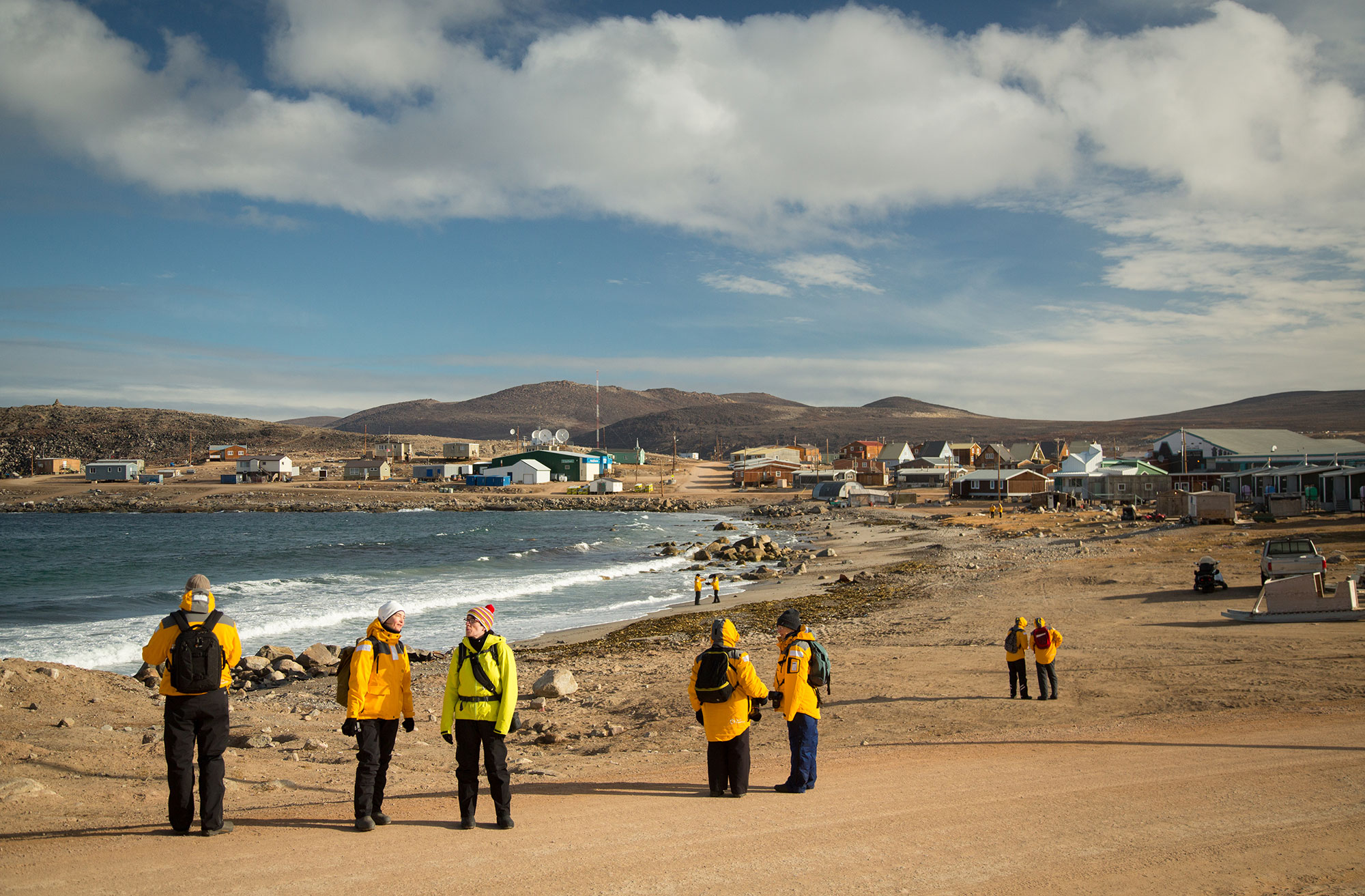
Explore colorful Inuit villages, and shop for traditional Inuit handicrafts. Hike the endless Arctic backdrop and marvel at the vast, colorful tundra. Keep your eyes peeled for the elusive and majestic creatures that make their home in this wilderness, such as whales, walrus, muskoxen and polar bears. Come aboard for this immersive journey along the legendary Arctic sea route, and return home with memories permanently etched in your heart.
Activity Areas
Polar
Polar Marine and Wildlife
Region & Country & City
Arctic: Canada, Canadian Arctic, Greenland, Iceland
Included in the Price
All accommodation: 14 nights in a choice of cabin types, 1 night hotel in Reykjavik and 1 night hotel in Calgary. - All meals while on the ship, plus beer and house wine during dinner - Immersive itinerary with all transport and listed activities - Full complement of qualified Expedition Staff - Mandatory transfer package including charter flights Reykjavik to Nuuk and Kangerlussuaq to Calgary
Not Included In The Price
Request a single cabin if required, purchase travel insurance and arrange any visas and vaccinations.
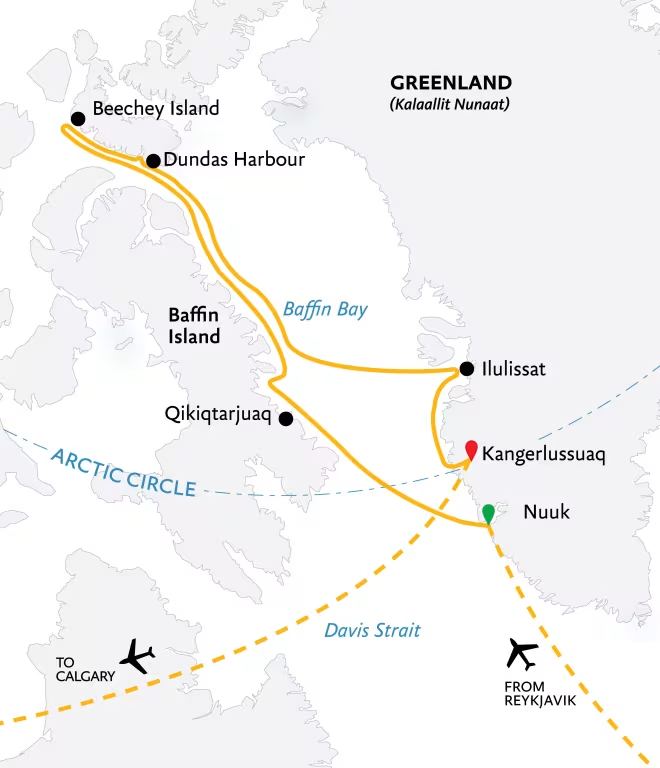
Map
Itinerary
Day 1 Start Reykjavik, Iceland
Arrive in the Icelandic capital and make your way to your designated hotel, which is included in your Charter Flight & Hotel Package. You will have the day to explore this fascinating city known for its stunning modern architecture, contemporary music and Viking history.
Day 2 Fly to Nuuk, Greenland and embarkation
In the morning after breakfast, guests and their luggage will be transferred to the airport for their charter flight to the Greenlandic capital of Nuuk. This picturesque city of 17,000 is situated on a fjord with the Sermitsiaq mountain in the background. Depending on the final timing of our charter flights, we may have an opportunity to explore Nuuk upon arrival in Greenland, or may transfer directly to your ship.
Day 3 Crossing the Davis Strait
Upon leaving Nuuk, we set sail across the Davis Strait to the east coast of Baffin Island. Join us on the outer deck as we cast off, keeping an eye out for seabirds and marine life gliding alongside the ship. Have your binoculars at hand to scan for seabirds, including great black-backed gulls and black guillemots. There are many ways to spend your time aboard Ocean Explorer. Visit Tundra Spa and other onboard amenities, or attend educational presentations led by our polar experts—glaciologists, historians and other specialists. You’ll learn about northern communities and ways of life in preparation for our first community visit.
There will also be mandatory briefings with our expedition team on how we’ll safely explore this remote and compelling Arctic region. You will also have time to relax in the Observation Lounge while spotting drifting ice, seabirds and other wildlife. From the outer decks, take in the wideopen panoramas of western Greenland while we cross the Arctic Circle at 66°33′ North.
Day 4 - 5 Exploring the East Shore of Baffin Island
We’re excited to be heading to Qikiqtarjuaq, fondly called Qik, a small Inuit hamlet located north of the Arctic Circle on Broughton Island, off the east coast of Baffin Island. Known as the iceberg capital of Nunavut, Qikiqtarjuaq sits at the northern entrance to the mountainous Auyuittuq National Park, which is home to narwhals, bowhead and orca whales, polar bears, seals and migratory birds. Community visits, arranged in collaboration with our local partners, enable guests to learn about on-the-ground culture, and purchase art and traditional handicrafts, such as parkas, boots and local art when available.
As icebergs travel down the Davis Strait, many are naturally trapped at Qikiqtarjuaq. The surrounding waters are also home to ringed and harp seals, often surfacing between floes. A hike up to the hilltop offers sweeping views of the community and its coastal setting. You’ll also see inukshuks—carefully placed stone figures or cairns that have served as navigational guides and markers of important places, but also as expressions of spirit, memory, and connection to the land.
Cruising further north along the mountainous east shore of Baffin Island, we’ll approach Isabella Bay, an important summer and fall feeding area for the largest concentration of bowhead whales in Canada. Bowheads are a truly remarkable Arctic leviathan, with research suggesting they can live more than 200 years—making them the longest-lived mammal on Earth. Isabella Bay is a marvel, its dramatic landscapes and wide open horizons best experienced from the outer decks of Ocean Explorer. We’ll aim to launch the Zodiacs and explore the bay, binoculars at the ready. For our intrepid paddlers, our sea kayak and paddling programs may also be available here.
Day 6 Icy Arm Fjord
This is an especially exciting day, as you become one of the few travelers to explore the stunningly majestic Icy Arm Fjord, which cuts almost 80 kilometers (50 miles) deep into northern Baffin Island. Accessible only by water in summer months when the sea ice recedes, this rarely visited fjord is known for its unrivalled landscape of towering cliffs and stunning glaciers, and is valued as much for its sheer remoteness as it is for its pristine environment.
Icy Arm Fjord is the epitome of unspoiled Arctic wilderness. We may observe polar bears, Arctic foxes, seals, walruses, and guillemots, kittiwakes and other Arctic dwelling birds. The fjord provides an excellent backdrop for Zodiac cruises and paddle activities, offering guests a sea-level intimacy with the surrounding lands and waters.
Day 7 - 9 The Northwest Passage
At the top of Baffin Island sits TallurutiupImanga (also known as Lancaster Sound), a true Arctic oasis. Known by the Inuit and their predecessors for thousands of years, this channel and the surrounding lands are extremely rich in wildlife and history, both indigenous and European. The surrounding area affords several hiking opportunities.
At Dundas Harbour, on Devon Island, you’ll visit an abandoned beachside outpost of the Royal Canadian Mounted Police. At Croker Bay, we’ll plan to cruise close enough to appreciate the splendor of glacial textures and calving ice, while always keeping a safe distance. Walrus frequent the waters here, so be sure to have your camera handy.
Next we’ll head to the western end of Devon Island, on the north side of Tallurutiup-Imanga, and go ashore at windswept Beechey Island, which is home to Beechey Island National Historic Sites. Maintained by Parks Canada, these sites tell the story—or at least the part that’s still not shrouded in mystery—of Sir John Franklin’s much chronicled 184546 expedition to explore the Northwest Passage.
The island is small, only 2.5 kilometers (1.5 miles) at its widest point, but its shores are steep, and rise to a flat plateau 244 meters (800 feet) high. That’s where Franklin and his crew of 128 men spent the winter after embarking from England on two ships, HMS Erebus and HMS Terror. The ill-fated 1845-46 expedition—to navigate and chart the Northwest Passage—ended in tragedy for all 129 men and their two vessels.
What happened to Franklin and his crew is the stuff of legend, and the focus for several search expeditions over the years, which discovered bodies, personal belongings of crew members, and handwritten notes that suggested starvation, deaths from hypothermia, scurvy, and lead poisoning from the tinned food supplies. Accounts by Inuit suggest the crew split up into small groups and subsequently perished. What is known for certain is that no one survived. The graves of three officers from HMS Erebus— John Hartnell, William Braine, and John Torrington— were discovered in 1851. You will have an opportunity to visit their graves, and honor the memory of the entire Franklin crew who braved daunting challenges to explore the Northwest Passage. Franklin’s story is an integral part of the history of Arctic exploration. The wrecks of Erebus and Terror were discovered in 2014 and 2016, respectively.
We also hope to explore the shores of the uninhabited Prince Leopold Island, known primarily as a significant Migratory Bird Sanctuary and an Important Bird Area, where we aim to launch the Zodiacs for an immersive cruise at the foot of the bird cliffs. The island is renowned for its steep cliffs that host hundreds of thousands of nesting seabirds, including thick-billed murres, northern fulmars, and black guillemots during the summer months.
Port Leopold, an abandoned Hudson’s Bay Company trading post dating back to 1937, sits on the northeast tip of nearby Somerset Island. It’s the closest landmark to Prince Leopold Island, situated about 13 kilometers (8.1 miles) to the southwest. This site is closely tied to the history of Arctic exploration, including the search for the Franklin Expedition. Visitors can still see the remains of the original trading post, including the old store and the manager’s home.
Day 10 Cruising the East Coast of Baffin Island
As we position from Lancaster Sound down along the east coast of Baffin Island, spend time out on deck to soak in the scenery: expansive landscapes, jagged spires, and bird life. Today is also ideal to enjoy the onboard amenities—such as Tundra Spa—and deepening your knowledge through presentations by our polar experts.
Day 11 Sam Ford Fjord
Well inside the Arctic Circle, Sam Ford Fjord is a standout Arctic adventure destination on Baffin Island’s northeast coast, and one of the world’s most spectacular big-wall playgrounds. A traditional Inuit hunting area, the fjord is a study in contrasts: sheer granite cliffs seem to rise straight up from the ocean below, reaching up to 457 meters (1,500 feet) above sea level.
If weather conditions permit, this region offers fabulous Zodiac cruising, sea kayaking and paddling as well as opportunities to go ashore. With a bit of luck, we may see Arctic fox onshore, and we’ll keep our eyes peeled for polar bears during our off-shore excursions. Cruising the fjord in a Zodiac is a striking reminder of just how small we are. Winding along a 110- kilometer (68-mile) path, Sam Ford Fjord narrows to less than 3 kilometers (2 miles) wide as it meanders farther inland.
Day 12 At Sea: Crossing the Davis Strait
As Ocean Explorer continues eastward across the Davis Strait, you’ll have a choice of presentations by our polar experts, who will share insights that bring greater meaning to the experiences so far and set the stage for our time in West Greenland.
Day 13 - 15 Exploring West Greenland
Prepare yourself for an awe-inspiring experience. Ilulissat, located in Disko Bay, is home to the UNESCO World Heritage Site of Ilulissat Icefjord, which is the thoroughfare for countless icebergs calved from one of the world’s fastest-moving glaciers, Sermeq Kujalleq. Locals have constructed a boardwalk leading to an elevated overlook, where you can view bergs of all sizes spread out before you. From this vantage point, it feels as though you’re standing where the town ends and the wilderness begins. Visitors say they’ve felt humbled by the sweeping vista of ice. You will also notice the Arctic cotton grass and summer wildflowers thriving in the long daylight hours.
The inner harbor is a rare sight: icebergs drifting among fishing boats and skiffs. The town itself is well worth exploring, and has become one of Greenland’s top destinations. Recent years have brought growth— colorful homes now sit beside new restaurants, boutique hotels and small businesses. History buffs will be excited to know Ilulissat is the birthplace of Arctic explorer Knud Rasmussen, who traveled by dog sled from Greenland to Alaska (and briefly Siberia) during the Fifth Thule Expedition (1921–1924). Fluent in Kalaallisut, he learned from and documented the Circumpolar Inuit he met—making it one of the Arctic’s greatest expeditions. It was in these dramatic landscapes around Ilulissat that Rasmussen’s passion for exploration took root.
As we approach town, watch out for whales, which frequent the iceberg-laden waters. Pride of place for our seasoned expedition team is Eternity Fjord, which is home to the tallest mountains in all of West Greenland. This a favorite spot for us to launch the Zodiacs to explore in-depth— where larger vessels can’t navigate. There are few settlements along this lengthy fjord, but you will quickly appreciate nature in its rawest form as you hike among the towering mountains, and photograph the colorful tundra and other dramatic landscapes.
Another fascinating highlight is Maniitsoq, often called the “Venice of Greenland,” as it’s situated in an archipelago intersected by natural canals. Soaring, snow-capped mountains surround this small, rocky town, whose name means “the uneven place.” Playful humpback whales spend the summer in the surrounding waters, so we’ll keep our eyes peeled as we transit ashore by Zodiac.
Day 16 Kangerlussuaq and disembarkation
Today we’ll explore 50 kilometers (31 miles) above the Arctic Circle. Our destination is Kangerlussuaq, which is Greenlandic for “the long fjord.” At the end of this 180-kilometer (112 mile) f jord is a settlement bearing the same name. Fishing boats based in the town of Kangerlussuaq sail the full length of the fjord to access the ocean. The town is known for its natural beauty—and for previously being the home of the largest airport in Greenland.
You will be ferried from ship to shore on one last Zodiac ride, then transferred to the airport where you will board your charter flight to Calgary, Alberta. Upon arrival at the airport, you will be transferred to your included hotel for the night, which is part of the Charter Flight & Hotel package.
Day 17 End Calgary
Today, make your way to the airport to connect with your onward flight, or stay longer to explore this unique Western Canadian city.